Low molecular weight
The product specification sets a molecular-weight limit of ≤1,000 Da.
 Luma Ingredients
A marine-origin peptide ingredient with a high-protein profile and defined molecular-weight specification.
We offer food-grade Antarctic krill peptide powder for food and nutrition formulation development. Product information specifies peptide content of ≥90% and molecular weight of ≤1,000 Da.
Food-grade · Powder · 24-month shelf life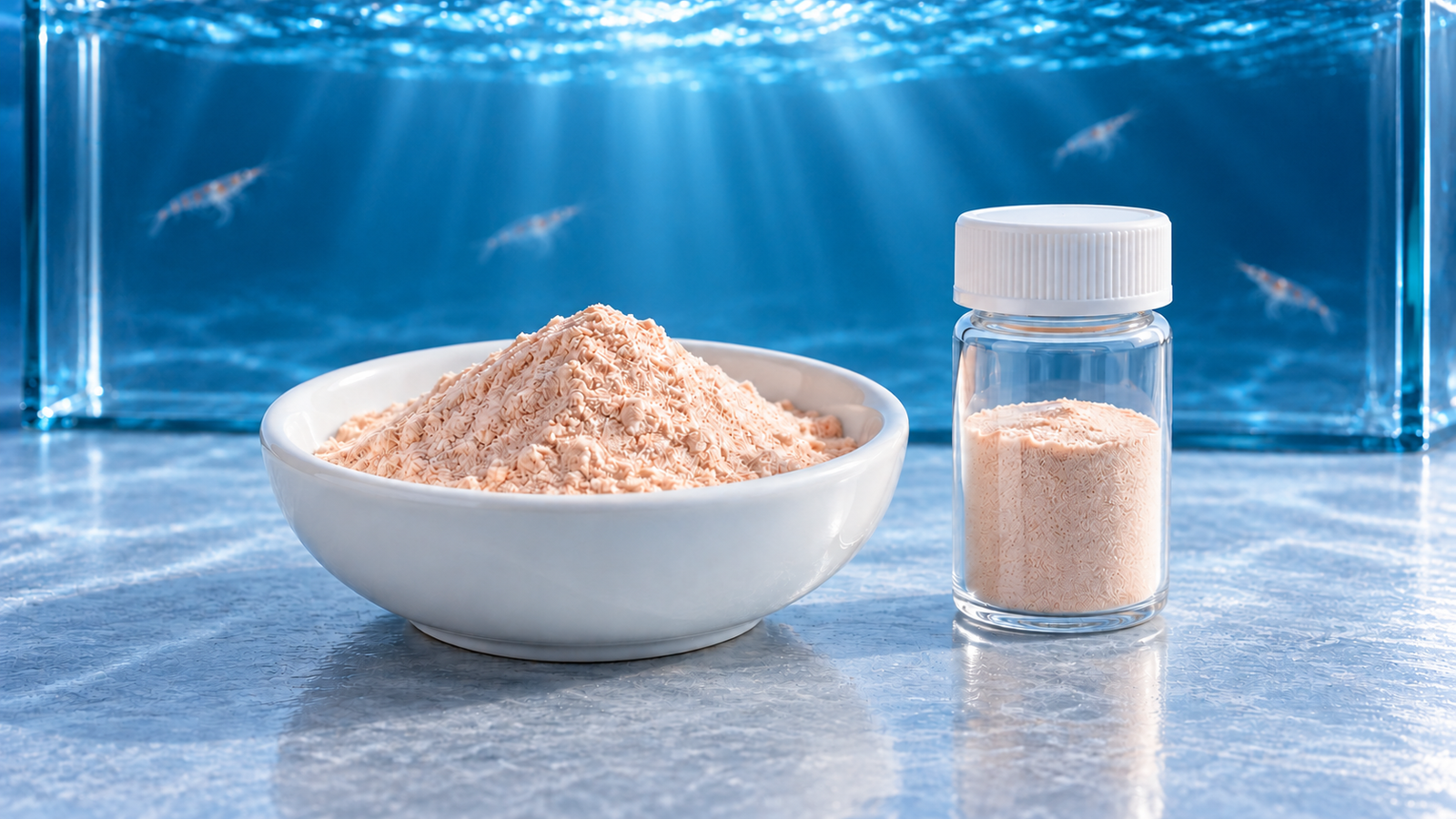 ANTARCTIC KRILL PEPTIDE
Antarctic krill is the source of this marine protein ingredient. Supplier materials describe sourcing from Southern Ocean waters and cold-chain handling at approximately −30°C from harvest through transport. They also describe the peptide powder as having no added ingredients; confirm these source and process details for the current item.
For product teams, the practical starting points are clear: a powder format, a high peptide-content specification and a stated molecular-weight limit. Ask us for current grade details and the documents relevant to your market.
Our process combines DED (directed enzymatic hydrolysis) with biological process control, developed in collaboration with Ocean University of China. Refining includes defluorination, deproteinization and desalting before powder finishing.
Product data describes a small-molecule peptide powder with a multi-amino-acid profile. Assess taste, solubility and compatibility in the intended formulation.
The product specification sets a molecular-weight limit of ≤1,000 Da.
Product materials list 18 amino acids, including 8 essential amino acids.
A convenient format for blending into dry mixes and other suitable product systems.
Use these product-sheet values as a guide for initial evaluation. Confirm current lot and grade information before formulation or label development.
| Energy | 1,545 kJ |
|---|---|
| Protein | 87.9 g |
| Fat | 0 g |
| Carbohydrate | 3 g |
| Sodium | 400 mg |
Nutrition values are product-sheet figures for reference. Request the current specification and batch COA for the item under evaluation.
Ask for current product specifications, batch COA, food-grade supporting documents and available third-party test records. Product status and market suitability should be checked for the intended use.
Tell us your target format, market and technical requirements. We’ll help you review the current product data and available documents.